

Inês Azeredo Caeiro: “Volunteering is an exercise in vulnerability that makes us more human.”
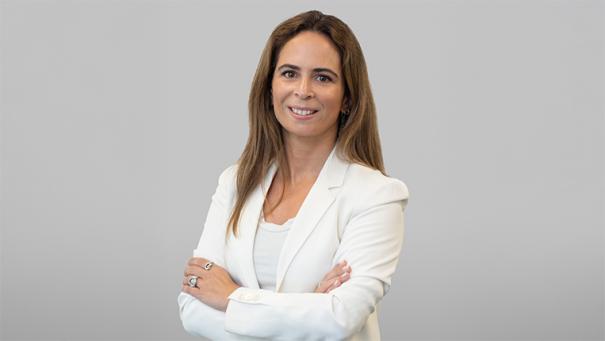
Inês Azeredo Caeiro is Executive Director of the Vasco Vieira de Almeida Foundation. She holds a bachelor’s and a master’s degree in Psychology from the Faculty of Education and Psychology of Universidade Católica Portuguesa and has a professional path strongly linked to social intervention and volunteering. After nine years of hands-on work at Vida Norte, she joined the corporate sphere, building bridges between investors, volunteers and social organisations through the Vasco Vieira de Almeida Foundation. In this interview, she reflects on not-always-obvious career choices, corporate social responsibility, and the profoundly transformative role of volunteering in personal and professional development.
What led you to choose Psychology, and which areas stood out during your undergraduate studies?
At the time, the choice was not particularly intentional. I knew I wanted to work in a field with close contact with people and considered health-related areas and social work. Psychology ultimately combined that desire to work with people with the opportunity to understand the human mind, relationship dynamics, and how these shape the way we think, feel and act.
During my degree, I was particularly marked by subjects related to psychotherapy for children and adults and to mental health, especially the emphasis on prevention. Having a large family and many friends, I had never truly reflected on the impact that support networks have on treatment, recovery and prognosis in mental health.
My curricular internship at a health centre and in prevention projects showed me that a mental health issue is never resolved in isolation: when working, for example, with a child, it is essential to involve the entire community - school, educators, peers and parents - and to understand all the contexts in which that person is embedded.
“Católica showed us that there were other ways to learn outside the classroom and to grow as individuals.”
When did you first connect with the social sector?
After completing my master’s degree, I began working at Vida Norte, an association that supports pregnant women and families in vulnerable situations. It was there that I discovered my fascination with social intervention. During my studies, I had already developed this interest through volunteering – through CASO (Católica Solidária) and Community Service - and at Vida Norte I was able to pursue it professionally.
My work involved supporting pregnant women and families: starting with a needs assessment, identifying available resources and establishing a comprehensive support plan that included psychological and social support, capacity-building, provision of material goods, home visits and activation of support networks. I dedicated nine years to close, hands-on family support. It was deeply impactful work because, despite dealing daily with human vulnerability, it was also possible to be a vehicle of hope, helping transform difficult stories into trajectories of support and growth.
Nine years later, you joined the Vasco Vieira de Almeida Foundation, where you are now Executive Director.
After nine fulfilling years at Vida Norte, the opportunity arose to join the Vasco Vieira de Almeida Foundation (a corporate foundation established by VdA), where I currently serve as Executive Director. I felt the need for a new professional challenge. At the Foundation, I immersed myself in the corporate sector, particularly in corporate social responsibility.
I realised that, beyond deeply understanding the needs of social organisations on the field, I could also operate from the perspective of investors and companies, continuing to support the social sector from that angle. My work essentially involves creating and strengthening bridges between investors (VdA and the Foundation), those who wish to help (employees and volunteers), and social organisations on the front line, which often operate with very limited resources.
What are the Foundation’s areas of activity?
We primarily operate in four areas: education; justice and human rights; knowledge and science; and culture. Our fundamental role is to support social organisations working in these domains. The Foundation’s vision and mission have always been oriented towards educating for citizenship and promoting opportunities for Vieira de Almeida employees to exercise their civic responsibility within a professional context.
We foster citizenship education within the firm and facilitate opportunities for employees to engage directly with the projects we support. Our assistance includes both financial investment - essential to ensure project continuity in communities - and non-financial investment, encompassing volunteering, capacity-building, mentoring programmes and fundraising campaigns.
Which projects does the Vasco Vieira de Almeida Foundation support?
Most of the projects we support and in which we act as investors and partners are based in Portugal, but we also support initiatives with significant impact in Angola, São Tomé and Príncipe, and Mozambique.
We collaborate with organisations such as Teach for Portugal, Upfarming, Stand4Good, Comunidade Vida e Paz, Junior Achievement Portugal and Girl MOVE Academy.
Internationally, I would highlight Girl MOVE Academy, which promotes leadership and entrepreneurship among young Mozambican women, particularly in Nampula. Each year, we host two young women for an intensive internship at VdA, during which, over five weeks, employees act as mentors, providing personal and professional development experiences and direct exposure to the labour market. This project generates a strong impact both for the “girl movers”, who gain tools and inspiration to face new challenges, and for employees, who are invigorated by new ideas and a strong spirit of innovation and social entrepreneurship.
The Foundation also develops its own projects, such as InclusivaMente, launched in 2019 in partnership with EAPN Portugal – the European Anti-Poverty Network, focusing on mental health and human rights in ageing and mental health contexts. With the new Statute of the Supported Adult, we identified widespread lack of awareness among social organisations regarding its implications. We therefore created a training programme for professionals, leaders, families and beneficiaries, addressing topics such as rights and duties of people in vulnerable situations, living wills and preparation for longevity.
In addition to these ongoing initiatives, we also promote one-off actions within the firm. We believe social change requires the joint effort of individuals, companies and organisations, and, as a foundation associated with a firm of more than 500 employees, we recognise our heightened responsibility in this process.
“My fascination and commitment to the social sector, this passion for making a difference, stem from my volunteering experiences.”
You have always been involved in volunteering initiatives. How did volunteering shape your education and contribute to the professional you are today?
Volunteering was decisive in my development. The importance of caring for others, especially those in more vulnerable situations, was always instilled by my family. However, it was only when I became directly involved in volunteering projects, through Católica, that I truly understood the real impact of such experiences - both on those who help and those who are helped.
Católica played a fundamental role: it showed us that, beyond core academic subjects, there were other ways to learn outside the classroom and to grow as individuals. Volunteering provided much of that growth and helped me understand how I wanted to position myself in the world.
After completing my master’s degree, I joined Grão, a volunteering group linked to the Jesuits, and undertook a two-month mission in São Tomé and Príncipe. All these experiences brought me closer to human vulnerability, making me more sensitive, empathetic and practical, and helping me move beyond self-centred perspectives. I realised how thin the line can be between stability and vulnerability.
What skills did volunteering give you?
It made me a more approachable and empathetic person, capable of communicating with diverse profiles - an essential skill in the labour market. Being placed in uncomfortable situations also helps us recognise our own privilege and better value our reality.
Undoubtedly, my fascination and commitment to the social sector, this passion for making a difference, stem from volunteering. It taught me to value the work of social teams and volunteers who deal daily with human fragility. Above all, it showed me that we can only better handle others’ vulnerability when we allow ourselves to experience it as well: volunteering is, in itself, an exercise in vulnerability that makes us more human.
“If corporate social responsibility was once a nice-to-have, today it is a must-have.”
How do you assess the state of corporate social responsibility in Portugal?
I look at it with hope. The journey towards sustainability is long, and each company starts from a different place: some have been engaged in social responsibility for many years, while others are just beginning. Still, I see meaningful progress. If corporate social responsibility was once a nice-to-have, today it is a must-have. Companies that do not engage in these areas risk being left behind.
Moreover, social responsibility has become a factor in talent retention. If an employee must choose between two companies offering equivalent salaries, they are likely to opt for the one whose purpose and values they identify with. For this reason, I see this commitment as a competitiveness factor. I also notice that companies previously less active in these areas are increasingly investing in corporate volunteering programmes, impact investment projects, social innovation and long-term partnerships with social organisations. It is no longer just about charity or occasional donations; there is a more conscious and structured strategy to generate lasting community impact and promote sustainability.
What advice would you give to students preparing for a career in the social sector?
My advice is to get involved on the field. Volunteering or direct work with social organisations is essential for anyone aspiring to work in social impact. In my case, the nine years at Vida Norte were decisive when I joined the Foundation: I already understood organisational needs, had developed relevant skills and could anticipate challenges.
Volunteering is excellent preparation. Engage genuinely and wholeheartedly. It is not merely about “doing” volunteering - going for a day and returning home - but about being a volunteer, incorporating that spirit of service into one’s way of being and truly placing oneself at the disposal of those in need.