
Susana Costa e Silva: “The Master’s in Management at Católica Porto Business School is among the 100 best in the world.”
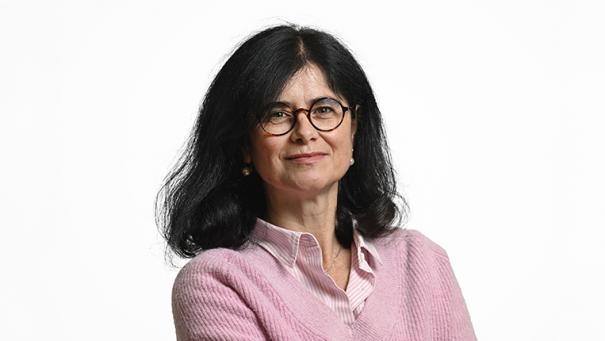
Susana Costa e Silva is an alumna of Católica and, in addition to being co-coordinator of the new PhD in Management, she is also coordinator of the Master’s in Management at Católica Porto Business School, which currently features in the Financial Times ranking. Born in Porto, she recalls a happy childhood and says she always had a strong desire to learn. She holds a PhD in Marketing from University College Dublin and has devoted her academic career to research in this field: “Marketing is about understanding the market, identifying what it values, and being able to deliver a product or service that makes sense.” In this interview, she tells us about choosing an academic career, her research, and her perspective on management education and the importance of internationalisation.
As coordinator of the Master’s in Management, which entered the Financial Times ranking this year, what is the importance of this distinction?
It is an international acknowledgement that places us among the top 100 management programmes in the world. We worked hard to achieve this result through high-quality and impactful research. Knowledge transfer is essential and was one of the pillars that led to our recognition by the Financial Times. But internationalisation is where we have made the greatest progress. Our faculty is almost entirely composed of PhD holders with proven teaching experience, both in Portugal and abroad. It is a team with significant international exposure and experience. Several colleagues teach regularly outside the country, and many were recruited through international selection processes. In my own case, I have been part of the faculty at the University of Saint Joseph in Macau for many years, and I have teaching experience in Brazil, across Europe and, more recently, in Dubai at the Institute of Management Technology. As a result of this international profile and the fact that three of the programme’s specialisations are taught entirely in English, the master’s attracts an increasing number of foreign students.
Many of the students who come to us are not Erasmus exchange students — they come specifically to complete the full master’s degree. They look for programmes with international recognition, and the Financial Times ranking helps increase visibility. At the moment, we already have a significant percentage of international students. The Financial Times classification acknowledges the work we have been carrying out, while also opening doors to new audiences who previously might not have considered our programme for the simple reason that it was not included in this ranking. We were already a Triple Crown school — a seal of excellence in itself — and this recognition further consolidates our international standing.
We also have excellent results that reflect the success of our graduates: strong salary levels and an above-average value-for-money indicator. The investment students make in the degree is rapidly offset after graduation, demonstrating a highly positive return. Another aspect we are proud of is gender balance. We have a very significant presence of women among both the faculty and the students, something that was already noticeable at undergraduate level. It is an indicator of diversity and balance that we greatly value.
What are your main childhood memories?
I was born in Porto but lived all my life in Vila Nova de Gaia. Recently, I have even been researching the founder of the school I attended, Diogo Cassels, and the influence he had on the area where I grew up. I was always a good student and had a huge appetite for learning. I loved school days and really enjoyed being there. My memories from that time are very positive. Those moments were not just about play — they were also opportunities for discovery. I was a very curious child. I recently found out that I still have my Gaia Library card, issued in 1984 when I was 11 years old. I spent a lot of time there reading everything I could find, both at the library and at school.
Where does this strong desire to learn come from?
My immediate family is not very large, and I may have been one of the first people to obtain a doctorate. My parents realised early on that I had a desire to go further. They understood that investing in books was worthwhile. So I would say that this desire to learn was, above all, encouraged.
You graduated in Management at Universidade Católica. When did you start to think about your professional future?
It was at university that I began thinking more seriously about my future. I studied at Católica between 1991 and 1996, supported by a scholarship, during what were considered the “Golden Years” of Management. Companies would visit universities to recruit the best final-year students, and I had the privilege of being among those who received several job offers. I began working with the feeling that I had secured the ideal job. However, I soon realised that I would feel more fulfilled in academia. A major influence was Professor Alberto Castro, the school’s director, who already knew me and was familiar with my academic path. When I understood that the academic world appealed to me more, I decided to accept the challenge. I joined in 1997, teaching International Economics — one of the areas I was most interested in, linked to the internationalisation of companies.
What motivated you was the desire to continue studying, researching, and teaching…
Yes, exactly. I wanted to keep studying, and I realised that, if I chose that path, I would have to pursue a master’s degree and, later, a doctorate. I started with a master’s in Economics because my work at the time was more aligned with that field. Economics and Management are like two essential tools for understanding the business world. Economics gives us the overall map: theoretical models, market forces, and the principles that explain the “why” behind phenomena. Management, on the other hand, provides the navigation kit: the practical techniques and decisions needed to run an organisation. One without the other is incomplete. Pursuing Economics was a challenge I set myself to better understand how the economy works, given that I had graduated in Management. At the time, I concluded that Management is more practical, more closely linked to the reality of organisations, and therefore extremely appealing. After the master’s, I moved on to a PhD in Marketing and International Business. That is when I returned to the practical and applied side of companies operating internationally - through exports, contracts, or foreign investment. I completed my PhD in Ireland, which was a wonderful experience.
What memories do you have of your time as a student at Católica?
I have many good memories. For example, I was recently in Johannesburg with classmates, and we are preparing to celebrate 30 years since our graduation, in May 2026. I made many friends, and it is curious that with some colleagues I developed stronger friendships after completing the degree than during it. We were a large group, and I still keep in touch with almost all of them. Some even have children who later studied here. I also have excellent memories of our professors - many of whom are now my colleagues - such as Professor Vasco Rodrigues, Professor Alberto Castro, Professor Luís Pacheco, Professor Rui Sousa, and many others. We are on a first-name basis now, but they were professors who greatly influenced me with their quality and academic rigour. I also fondly remember moments spent at the University and outside it, enjoying time with colleagues. They were very happy years.
What distinguishes the teaching at Católica Porto Business School?
Undoubtedly, proximity. The close relationship between students and faculty has always been a hallmark of our school. At the time, there was a true open-door policy, which we still maintain today. This spirit comes from the time when the school was smaller. We were many per class, but there were fewer programmes (there was no Economics degree yet, nor any master’s degrees), so we all knew each other well, students and professors alike.
I remember almost every professor I had, some now retired. I recall, for instance, Engineer Pinto Santos, who played an important role in our education. I remember going into his office to talk about my professional future - I was torn between pursuing teaching or accepting a job offer - and he listened attentively. I never forgot his words. Later, when I completed my habilitation exam, I had the opportunity to thank all the professors who guided me and were always willing to listen.
Your area of specialisation is Marketing. What makes this field so fascinating?
Interestingly, Marketing was not my first choice after finishing my degree. At that time, my interest was internationalisation, the theme of my master’s thesis and my first book. It was only when I had to decide on my PhD topic that I began considering Marketing.
In Portugal, there is still a misconception about marketing. We often hear “that’s just marketing,” as if it were something deceptive. That saddens me because the true meaning of the word is precisely “to take to the market.” Many students begin a marketing degree believing it is purely about communication, and they finish with a very different perspective. They understand that marketing is also strategic thinking, planning, value creation, and researching the market even before products are created. I like a quote from Henry Ford that illustrates this well: “If I had asked people what they wanted, they would have said faster horses.” This means that listening to the consumer is not enough, and listening solely to engineers is not enough either: constant dialogue between both sides is needed. Real marketing lies in that balance: understanding how capable we are of developing value propositions while recognising what the market truly needs, even before it is aware of it.
Marketing is understanding the market, identifying what is valued, and being able to deliver a product or service that makes sense, both for consumers and for the company. It was in this sense that I realised marketing is essential not only for individual consumption but also for industry and the broader corporate context. Combining the international dimension with marketing became a natural research path for me.
What themes has your research focused on?
At first, I researched mainly the relationships companies establish among themselves to internationalise — international alliances, joint ventures, consortia, motives for foreign direct investment or exports. All of this is part of the process of “going to the market,” but on a macro level. I still pursue this line of research today. More recently, however, I have focused on consumer behaviour. I am interested in understanding how research can help companies better understand consumer intentions, for example, when using self-checkout systems at supermarkets or AI devices, or interacting with companies through websites, chatbots, or voice assistants. If a bank creates a virtual assistant, for example, it is important to understand how consumers respond to that experience, and how it influences satisfaction and trust. I seek to understand what leads a consumer to choose one product over another on an e-commerce website, and the impact of certain stimuli - pop-ups, games, discounts, or other promotional messages - on purchase intention. These mechanisms may increase engagement but may also cause irritation or a sense of intrusion. I am currently also working within Consumer Psychology, using not only questionnaires but also neuroscience methods. For example, we use electroencephalograms to measure brain reactions and understand what causes more stress or joy, without having to ask consumers directly. Overall, my research combines two major areas: Marketing and International Business.
You have also developed work in the area of social marketing. What does it involve?
I have been researching social marketing since 2010, and it started after two significant periods spent in Guinea-Bissau in 2010 and 2011, where I realised that marketing can be used to promote behaviours that benefit society. Social marketing is used, for example, to encourage positive actions (exercising, donating blood, or drinking more water) or to reduce harmful behaviours, such as domestic violence or female genital mutilation, which is a serious issue in Guinea-Bissau. In all cases, marketing helps guide behaviour for the common good. People often associate marketing with something negative, but it can have a profoundly positive role. Social marketing shows exactly this: that the same tools used to sell products can be applied to social and behavioural causes that improve life in society. That is why social marketing is often described as the marketing of behavioural change.
Is this a field that is not yet well developed or studied in Portugal?
I do not think it is as undeveloped as people assume. What exists, instead, is a lack of awareness of the importance of marketing in behaviour change. There is extensive social work being done in Portugal. I currently sit, for example, on the Board of the Portuguese Red Cross in Gaia. There are many people and institutions working in this field, but few recognise the decisive role marketing can play in carrying out these initiatives. Through the training offered by the Area of Social Economy, which I have been involved in for around 15 years, I have had the opportunity to help train people who wish to expand their knowledge in this area - a change I welcome.
Within this training, I have met many organisations with very specific missions: helping immigrants adapt to driving in Portugal, encouraging visits to nursing homes, promoting cycling, encouraging recycling, or even teaching Portuguese. These are diverse social responses, but almost none include marketing specialists. And that is a limitation, because marketing is precisely the field that allows a programme of action to be structured - analysis, planning, implementation and control - turning good intentions into concrete results. I recall a case examined at a conference in Porto, about young people in Wales who would set fires as a tradition. A task force was created to understand the origins of this behaviour. When a marketing methodology - identifying causes, defining strategies and measuring results - was applied, it became clear that the issue was linked to a lack of leisure alternatives. These alternatives were then created and the number of fires decreased. This example illustrates how marketing can help solve social problems when combined with proper analysis, which invariably requires local involvement. The capacity to put ourselves in someone else’s position is just as valuable in social marketing as it is in society as a whole.
Pessoas em Destaque é uma rubrica de entrevistas da Universidade Católica Portuguesa, Centro Regional do Porto.